News & Articles

Sterile Medical Protection

The Case for Alternative Flash-Spun HDPE: Diversifying Your Barrier Material Supply

[vc_row][vc_column][vc_column_text css=\”\”] For decades, the market for flash-spun high-density polyethylene (HDPE) has been heavily centralized. Material scientists, cleanroom directors, and packaging specialists have largely relied on a singular, dominant legacy brand. While this material has proven its efficacy, operating in a single-supplier ecosystem poses significant risks. Supply chain bottlenecks, rigid pricing structures, and limited flexibility […]

The Case for Alternative Flash-Spun HDPE: Diversifying Your Barrier Material Supply Read More »
Breathable Outdoor Materials: Balancing Liquid Resistance and Vapor Release in Real Conditions

[vc_row][vc_column][vc_column_text css=\”\”] Why outdoor materials are being redefined Outdoor performance fabrics are no longer judged only by whether they can block rain.In real use scenarios, comfort and stability depend on something more subtle: 👉 How a material manages both external moisture and internal humidity In many environments, especially multi-day outdoor use, the real challenge is

Breathable Outdoor Materials: Balancing Liquid Resistance and Vapor Release in Real Conditions Read More »

The Clinical Reality of Sterile Barriers: Why Polymer Architecture Dictates Aseptic Success

[vc_row][vc_column][vc_column_text css=\”\”] When a surgical team prepares an operating room, the sterile barrier system (SBS) is the final line of defense against microscopic failure. For medical device manufacturers and clinical staff, a packaging substrate is never just a wrapper—it is a functional component of the medical device itself. Historically, the industry has relied on standard

The Clinical Reality of Sterile Barriers: Why Polymer Architecture Dictates Aseptic Success Read More »

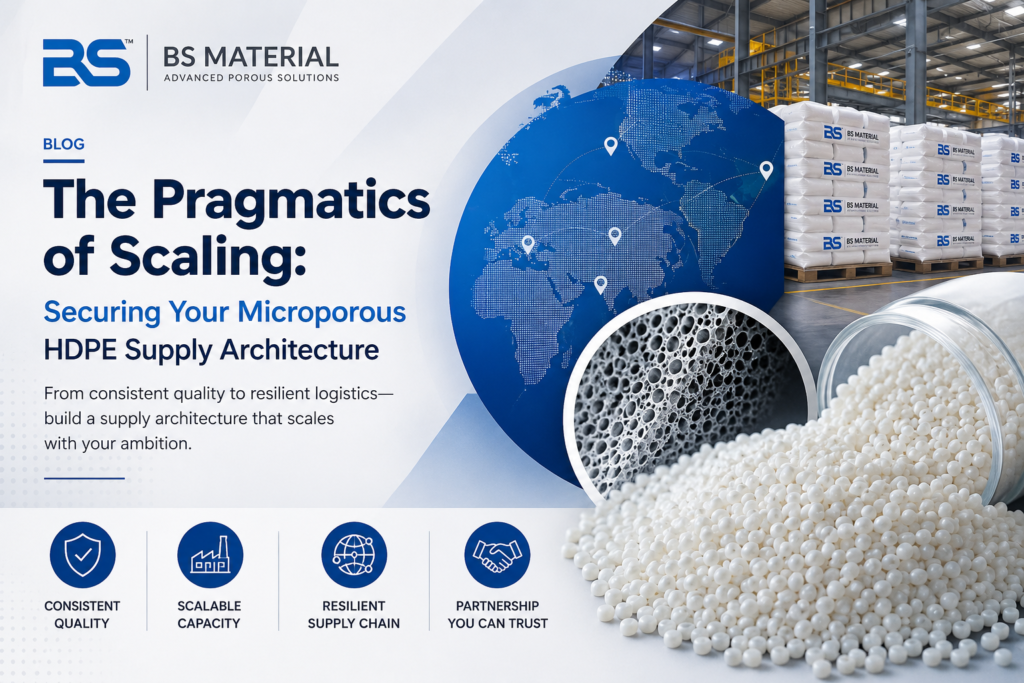
The Pragmatics of Scaling: Securing Your Microporous HDPE Supply Architecture

[vc_row][vc_column][vc_column_text css=\”\”] When you are architecting medical breathable barriers, bio-transfer membranes, or high-performance technical textiles, the structural demands on your material are absolute. You require predictable Moisture Vapor Transmission Rates (MVTR), rigorous hydrostatic resistance, and unyielding tear strength. The default move is often to specify the legacy \”industry standard\” flash-spun HDPE. It works. But as

The Pragmatics of Scaling: Securing Your Microporous HDPE Supply Architecture Read More »

Optimizing Building Envelopes: The Hygrothermal Dynamics of Advanced HDPE Weather Barriers

[vc_row][vc_column][vc_column_text css=\”\”] In modern building science, the envelope is no longer just a structural shell; it is an active, dynamic boundary managing the complex interplay of thermal resistance, air infiltration, and moisture vapor transmission. As building codes push for tighter assemblies to maximize energy efficiency, the risk of interstitial condensation rises exponentially. To mitigate structural

Optimizing Building Envelopes: The Hygrothermal Dynamics of Advanced HDPE Weather Barriers Read More »

The Comfort-Barrier Paradox: Rethinking Protective Apparel in High-Stakes Environments

[vc_row][vc_column][vc_column_text css=\”\”] In high-stakes clinical and controlled environments, the structural integrity of protective apparel is a non-negotiable line of defense. However, professionals operating in the Safety & Protection sector face a persistent physiological challenge. The paradox is clear: the denser the barrier against viral and chemical threats, the higher the thermal and cognitive toll on

The Comfort-Barrier Paradox: Rethinking Protective Apparel in High-Stakes Environments Read More »

The Physics of Flash-Spun HDPE: Solving Cross-Industry Constraints

[vc_row][vc_column][vc_column_text css=\”\”] For materials scientists and product developers, selecting a flexible substrate traditionally requires accepting inherent compromises. Wet-laid cellulose provides breathability but fails under hydrostatic pressure; standard melt-blown polymers offer filtration but lack tensile strength; solid films provide absolute barriers but trap vapor and induce condensation. Flash-spun High-Density Polyethylene (HDPE) shatters these traditional boundaries. Through

The Physics of Flash-Spun HDPE: Solving Cross-Industry Constraints Read More »

The Breathability Paradox: Engineering Better Protective Barriers

[vc_row][vc_column][vc_column_text css=\”\”] In high-stakes operational environments—ranging from ISO-certified cleanrooms to aggressive chemical processing facilities—environmental health and safety professionals face a persistent engineering paradox: the inverse relationship between absolute barrier protection and thermal comfort. For decades, the standard approach to blocking sub-micron particulates and hazardous fluids has relied on impermeable substrates. However, impermeable barriers trap latent

The Breathability Paradox: Engineering Better Protective Barriers Read More »

The Role of HDPE Breathable Membranes in Maintaining Aseptic Integrity

[vc_row][vc_column][vc_column_text css=\”\”] In the high-stakes environment of an operating theater, the sterile barrier system is the absolute final line of defense between a life-saving medical device and devastating healthcare-associated infections (HAIs). When a surgical team opens an implant, a catheter, or a complex surgical instrument, there is zero margin for error. The structural integrity of

The Role of HDPE Breathable Membranes in Maintaining Aseptic Integrity Read More »

Engineering the Next Generation of Sterile Barrier Systems: Advanced Flash-Spun Polyolefins in Critical Care

[vc_row][vc_column][vc_column_text css=\”\”] In the high-stakes environment of critical care and pharmaceutical delivery, the integrity of a Sterile Barrier System (SBS) is non-negotiable. For packaging technology engineers and clinical professionals, the selection of porous materials dictates not only the efficacy of the sterilization process but also the ultimate safety of the patient. As global healthcare infrastructure

Engineering the Next Generation of Sterile Barrier Systems: Advanced Flash-Spun Polyolefins in Critical Care Read More »