
[vc_row][vc_column][vc_column_text css=\”\”]
Executive Summary:
For decades, the market for breathable, waterproof, and tear-resistant synthetic materials has been dominated by a narrow set of legacy manufacturing processes. While traditional 100% High-Density Polyethylene (HDPE) flashspun nonwovens offer undeniable performance, reliance on single-source suppliers has created significant supply chain vulnerabilities. This article explores the hidden costs of legacy material sourcing and outlines how next-generation HDPE manufacturing is solving the industry\’s most pressing bottlenecks.
The Hidden Costs of Single-Source Reliance in Advanced Nonwovens
Professionals responsible for securing advanced protective packaging, medical barriers, and weather-resistant construction materials often face a frustrating paradox: the materials engineered to protect their products are the same ones leaving their supply chains vulnerable.
When a single type of legacy material dominates the specifications sheet, several critical pain points emerge across the procurement lifecycle:
1. Unpredictable Lead Times and Allocation Limits
The most significant vulnerability of relying on conventional market-leading synthetic papers is supply volatility. During periods of high global demand, commercial partners often find themselves placed on strict allocation. This lack of material fluidity forces project delays, stalls production lines, and requires companies to hold excessive, costly safety stock just to ensure continuous operation.
2. Relentless Margin Compression
Premium performance historically comes with a premium price tag. However, when market competition is scarce, the cost of premium flashspun HDPE materials becomes a non-negotiable line item that aggressively compresses operational margins. Sourcing professionals are increasingly tasked with finding materials that deliver identical microscopic barrier properties—waterproofing paired with high vapor permeability—without the inflated costs associated with legacy monopolies.
3. Inconsistent Printability and Surface Tension
High-performance nonwovens are notoriously difficult to convert. Traditional solutions often present challenges with ink adhesion, requiring specialized coatings or extensive pre-treatments before flexographic or offset printing. Inconsistent surface tension can lead to longer setup times, increased waste during the printing process, and suboptimal visual execution on the final product.
Evaluating Next-Generation 100% HDPE Solutions
The evolution of polymer engineering means that superior strength-to-weight ratios and selective permeability are no longer exclusive to a single origin. When evaluating alternative 100% HDPE materials for critical applications, technical evaluators should demand the following structural benchmarks:
-
Micro-Porous Breathability vs. Liquid Barrier: The core utility of advanced HDPE lies in its labyrinthine microstructure. The material must completely block liquid water and fine particulates down to the sub-micron level, while maintaining a high Moisture Vapor Transmission Rate (MVTR) to prevent condensation buildup.
-
Isotropic Tear and Puncture Resistance: Unlike standard woven fabrics, premium HDPE must deliver multidirectional strength. It should resist initial punctures and, more importantly, prevent the propagation of tears under high-stress conditions like automated packaging or heavy-duty industrial wrapping.
-
Optimized Surface Energy for Conversion: Modern alternatives are engineered with conversion in mind. Look for HDPE sheets that offer superior corona treatment retention, ensuring crisp, high-fidelity print results without the need for expensive proprietary inks.
-
A Closed-Loop Sustainability Profile: As global regulations tighten, materials must be seamlessly recyclable. 100% HDPE products that are free of binders, fillers, or mixed polymers can be cleanly integrated into existing #2 plastic recycling streams.
Securing Supply Chain Resilience: The Banshan Advantage
The most competitive organizations are shifting away from passive procurement to active supply chain diversification. Transitioning to advanced 100% HDPE alternatives not only mitigates the risk of stockouts but also restores leverage during cost negotiations.
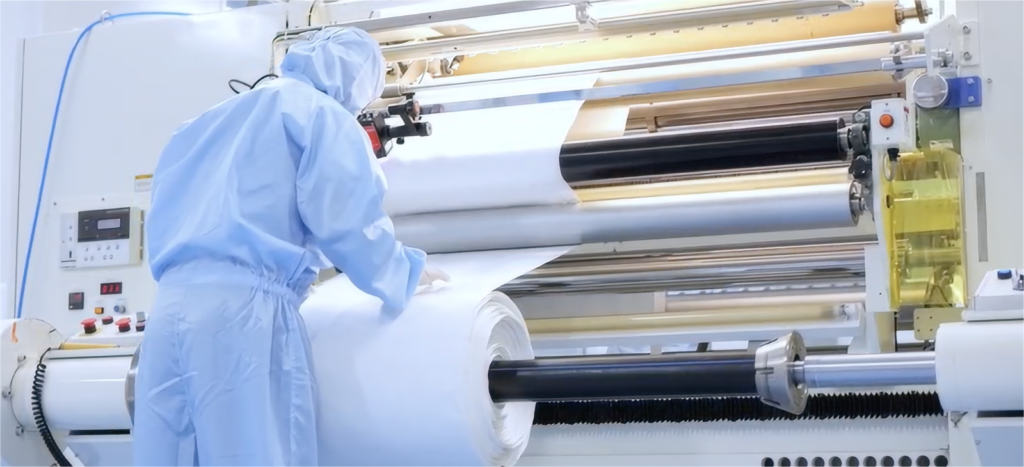
This is exactly where Banshan shifts the paradigm. Engineered to match the rigorous structural benchmarks of legacy materials without the associated supply constraints, Banshan’s 100% HDPE nonwovens deliver the critical micro-porous breathability and isotropic tear resistance your applications demand.
By onboarding a modern, dedicated manufacturer like Banshan, commercial teams can permanently eliminate production bottlenecks, stabilize forecasting, and protect their bottom line—finally securing premium performance on their own terms.
[/vc_column_text][/vc_column][/vc_row]